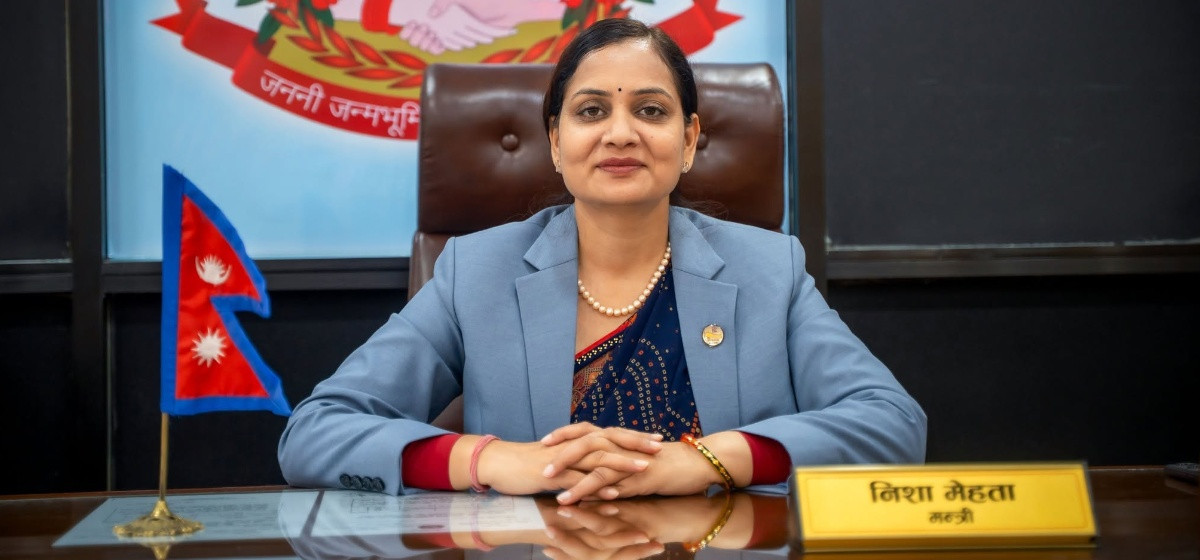
Kathmandu. Health and Food Hygiene Minister Nisha Mehta has said that the indiscriminate use of antimicrobial drugs is adding challenges to the treatment of infections and increasing the financial burden on the health system.
On the occasion of the World Antimicrobial Awareness Week 2026, she said in a program organized at the Ministry of Health today that the indiscriminate use of antimicrobial drugs makes the treatment of infections difficult and also increases the cost of treatment.
She said that in order to control it, it is necessary to effectively implement the national action plan and coordinate efforts at the federal, provincial and local levels.
Minister Mehta said that judicious use of drugs, effective regulation and coordination between health, agriculture and livestock sectors are necessary to control antimicrobial resistance (AMR). She said, “AMR is not only a problem in one area but has become a common challenge linked to humans, animals, plants, food systems and the environment.”
In the program, Minister Mehta released the document ‘Survey on the Use of Antimicrobial Medicines in Hospitals of Nepal’. It is expected that this study will help in collecting systematic data on drug use and medical recommendation practices in hospitals. It is also believed that the survey will help in promoting the prudent use of antimicrobial drugs in hospitals and in the formulation of evidence-based policies.
Minister Mehta said that in addition to strengthening the regulatory monitoring on the use of drugs for AMR control, priority should also be given to vaccination, infection prevention and control and safe drinking water, sanitation and hygiene practices.
The World Antimicrobial Awareness Week, which is celebrated every year from November 18 to 24, is being celebrated in Nepal this year with the main slogan of ‘One health, one campaign to prevent resistance from today’.