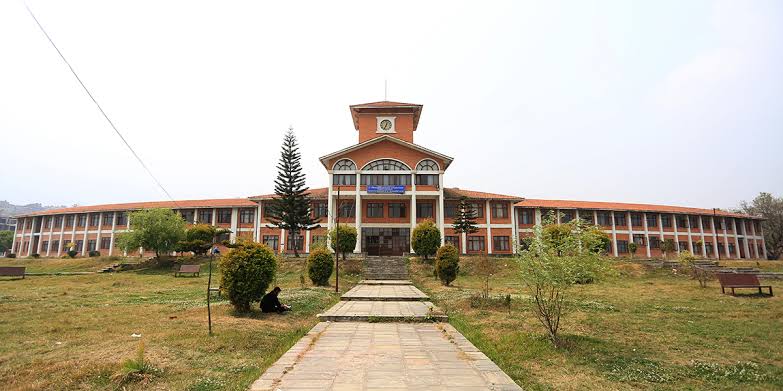
Kathmandu. Tribhuvan University is going to further expand the decentralization policy to raise the educational quality and make the administrative services agile. TRI is going to take this step to end the existing hassle of having the campus to run the central office even for small administrative work.
According to the vice-chancellor of the university, Bhola Thapa, the main goal of this campaign is to ensure administrative effectiveness, financial transparency and institutional accountability along with academic reforms. The University is preparing to study the ‘Decentralization Rule 2055’ in a timely manner and include the campuses that have not yet joined this process.
It is the conclusion of the University that most of the study institutes and campuses that have gone to decentralization have paid more attention to the use of economic rights rather than academic quality. Vice-Chancellor Thapa said that due to the financial decisions that are favorable to him, the university has become more prosperous.
The prevailing decentralization rules have given autonomy to study institutes, faculties, research centers and individual campuses to grant grants as well as policy formulation, plan implementation, monitoring, evaluation and general action. Similarly, the rule also leaves open the way to determine additional fees apart from those prescribed by the Executive Council.
In terms of financial management, there is a provision that 30 percent of the total income earned by the relevant bodies should be paid to the central fund of the university. The remaining 70 percent of the money can be collected in its own separate fund and spent after getting the budget approved by the Management and Development Council.
According to the latest statistics of the University, eight campuses have achieved full autonomy so far. Similarly, seven study institutes and research centers and 42 individual campuses have gone through the practice of decentralization, while now only 12 campuses are yet to join this process.