Kathmandu. With the aim of modernizing Nepal’s traditional brick industry and making it environmentally friendly, a plan to mobilize carbon finance worth 60 million US dollars (about nine billion rupees) has been launched.
Hulas under Diwakar Golcha Organization is going to carry out this program in collaboration with Eco BRICS and Inocsr, a company that develops climate technology. According to Hitesh Golchha, director of Diwakar Golchha Organization, the plan is to establish 300 modern brick production centers across the country within the next three years.
“Under this plan, 300 brick industries will be provided machines worth about two hundred thousand US dollars. After 10 years, the ownership of the machines will be transferred to the respective industries,” he said.
Golchha said that this plan is not to replace the currently operating brick industry, but to provide them with new technology free of charge. According to him, this will give an opportunity to the existing industries to easily convert to new technology.
According to Pankaj Pandey, managing director of INOCSR Nepal, who is involved in the program, funds will be raised for this plan from international carbon credit buyers, climate funds and financial institutions. This will reduce the burden of large initial investment required by the industry to adopt new technology. He said that instead of displacing the traditional brick industry, the aim of the program is to transform it into a new technology.
Mobilizing investment from carbon credits
According to director Golcha, the financial basis of this program is carbon credits. Greenhouse gas emissions reduced by adopting the new technology compared to conventional brick production will be measured and converted into carbon credits.
Monitoring, measurement, documentation and verification (MRV) of how much emissions have been reduced by the new technology will be done. The income generated by selling the carbon credits in the international market will be used as a financial source for the project.
Airline companies, technology companies and other large organizations that emit more carbon in the international market have purchased carbon credits for their emission management.
A target of reducing emissions by 1.5 million tonnes per annum
The company estimates that about three billion bricks can be produced annually after the 300 production centers proposed under the program are operational at full capacity. It is estimated that one machine can produce about one crore bricks annually and three billion bricks are produced from 300 centers. The company’s initial estimate is that carbon dioxide emissions can be reduced by about 1.5 million tons per year with the new technology compared to traditional brick kilns.
According to director Golchha, in the traditional brick production process, carbon emissions of about 500 to 550 grams are produced when one brick is produced. The emission reductions achieved by adopting new technologies will be measured and converted into carbon credits. It is estimated that there is an annual demand of four to five billion bricks in Nepal.
Expected to solve the challenges of the brick industry
Labor management, coal procurement, land management and seasonal nature of production are major challenges in running a traditional brick industry. Pandey, the managing director of INOCSR, said that to operate a traditional brick kiln, 300 to 400 workers need to be managed and 20,000 to 50,000 tons of coal must be brought.
Similarly, he said that the operation of the industry is becoming difficult due to the pressure of the local community and environmental standards, which require 100 to 400 ropani of flat land for the operation of the brick kiln.
What is the Good Bricks technique?
Usually clay is shaped and fired in a kiln to make bricks. This requires large quantities of coal or other fuels. Burning fuel emits various pollutants including carbon dioxide. But the Good Bricks technique does not require traditional firing to produce bricks.
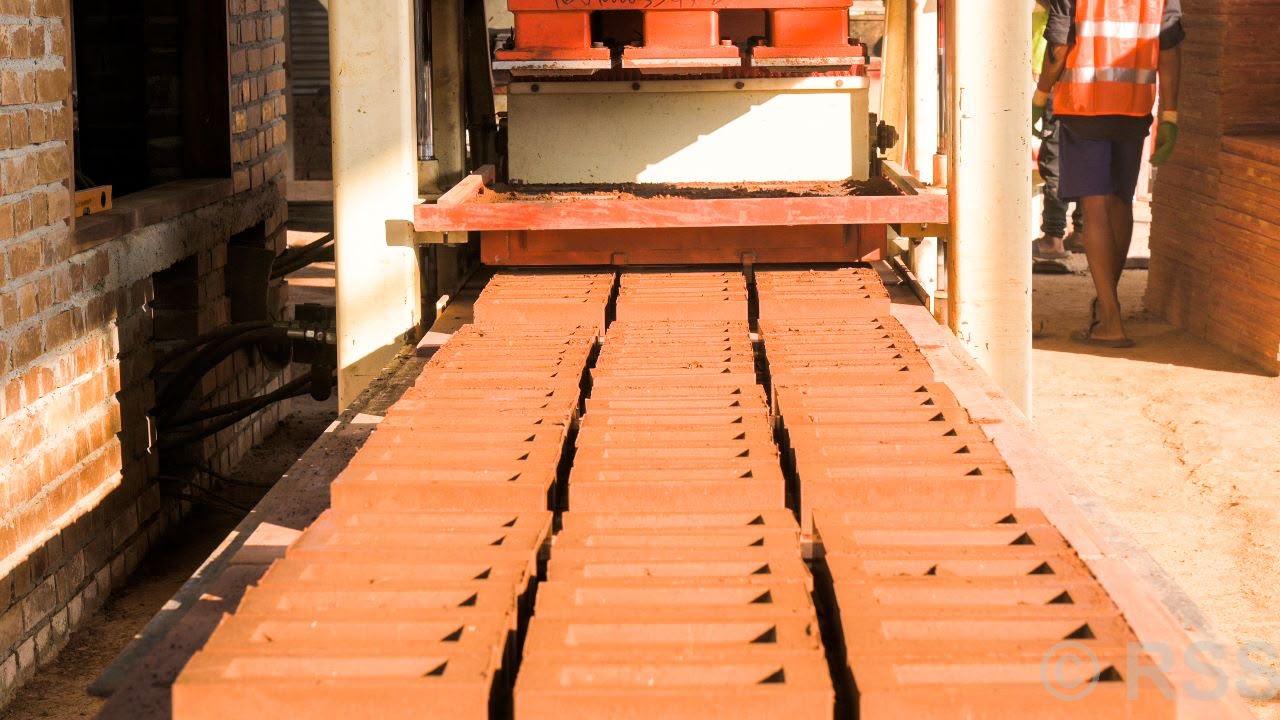
This technology uses locally available soil, cement and a special substance ‘Good Soil Stabilizer’ developed by INOCSR. These materials are mixed in the required ratio and shaped into bricks pressed under high pressure by a hydraulic press machine. Bricks prepared in this way do not need to be fired in a kiln.
It is expected to reduce the consumption of fossil fuels including coal and help in reducing air pollution and carbon emissions during brick production. According to the company, the bricks produced by this technology have been developed in such a way that they can compete with traditional bricks in terms of quality, production capacity and cost. However, when assessing its true environmental benefits, emissions from raw material production, including cement, must also be included.
Technology expansion by collaborating with older industries
An agreement was reached between INOCSR and Hulas Eco BRICS under the Diwakar Golcha Organization to conduct the program in August 2026. According to the agreement, the company is expanding the technology under the ‘Hulas Good Bricks’ brand.
Hulas plans to utilize the industrial experience of the Diwakar Golcha Organization along with the network of more than a hundred dealers and partners related to construction materials across the country. INOCSR will provide necessary technology and technical assistance.
For this, Pandey said that the big builders under the Federation of Construction Professionals (FCAN) and the members of the Nepal Brick Industry Federation will be encouraged to adopt new technology.
Production has already started in Nepal
The Good Bricks technology is not entirely new to Nepal. INOCSR has already set up production centers based on this technology at Changlingtar in Gorkha, Shantichour in Surkhet and Rautgaon in Jajarkot, the company said.
According to the information released by the company in January 2026, these centers were established with the financial support of the Korea International Cooperation Agency (KOICA) and in partnership with Reserve Carbon. According to the company, the combined production capacity of the two production centers is about 1 million bricks per month.
These centers are expected to help meet local demand for construction materials, reduce transportation costs and promote eco-friendly brick production on a commercial scale. This technology is also considered important from the point of view of providing construction materials at the local level for reconstruction in areas like Jajarkot, which were especially affected by the 2023 earthquake.
Pandey, the managing director of INOCSR, mentioned that the government of Nepal has set a target of net zero carbon emissions by 2045 and said that it is necessary to use this technology to achieve that. He said that discussions are being held with various government agencies for cooperation in this program.