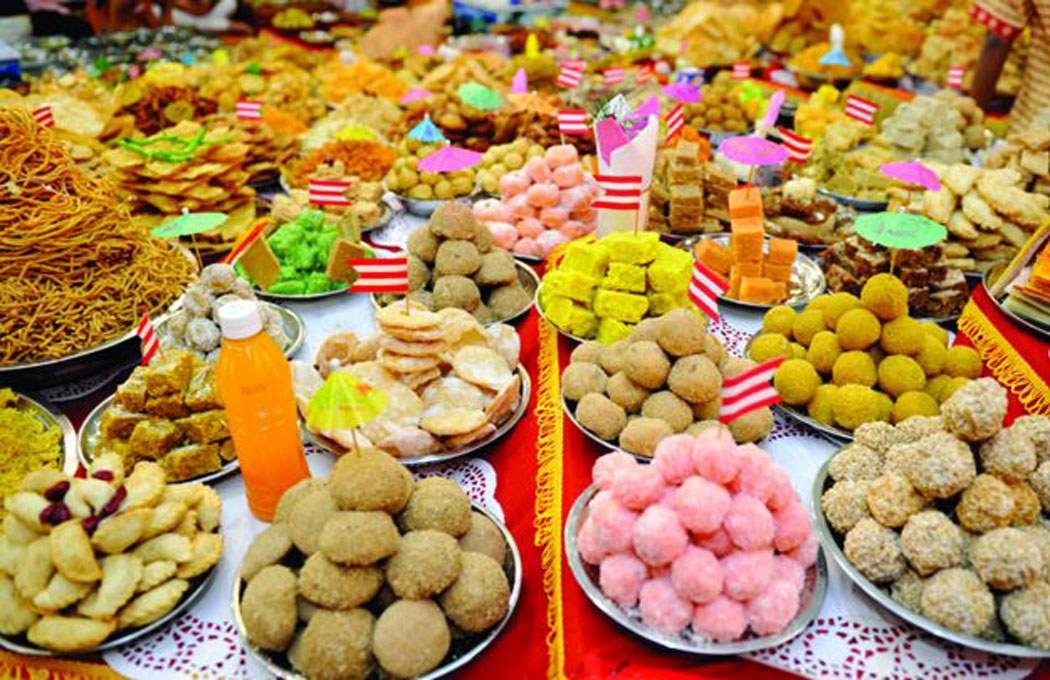
Kathmandu. With the beginning of Tihar, there has been an increase in the trading of food items such as sweets, fruits, oil, ghee in the market. There has also been an increase in making traditional dishes such as Selroti, Anrasa, Phini, and Lakhmari at home and buying them from the market.
Although there is a tradition of eating various dishes along with the hustle and bustle of the festival, health problems may arise if the quality, hygiene and quantity of food is not taken care of. Therefore, food experts and nutritionists have suggested to take special precautions while making food for Tihar or buying it from the market.
Foods cooked in oil or ghee are consumed more during Tihar. The Department of Food Technology and Quality Control suggests that attention should be paid to the quality of the oil used and the way it is used while making dishes such as Celroti, Anrasa, Fini, Nimki etc. According to the department, even though no inedible items were used in the sweets during the monitoring conducted for the festival, it was seen that not enough attention was paid to issues such as kitchen cleanliness and reuse of oil.
Celroti is considered as a must during Tihar. In most of the houses, many Celeroti are cooked at once. In this process, there is also a tendency to reuse the remaining oil. But experts say that once the used oil is cooled and reheated, it can be harmful to health.
According to Bhim Prasad Pulami, senior research officer of the Food Technology and Quality Control Department, oil that has been used once should not be used for cooking again. When the oil is repeatedly heated, its quality decreases and harmful substances that affect health can also be formed.
Therefore, he suggests not to re-use the remaining oil after cooking cel roti to make other dishes. He said that used oil can be used for other suitable purposes other than food.
Likewise, it is not advisable to cook different types of food repeatedly in the same oil. The habit of heating the oil too much and using it for a long time should be avoided. During Tihar, the demand for various types of sweets increases in the market. Consumers are more attracted to sweets that look attractive and have bright colors. But experts suggest that the quality and ingredients used in sweets should be prioritized over the external attractiveness.
All food colors used in sweets are not harmful. According to the standards set by the government, approved food colors can be used within certain limits. But sweets that use more color than necessary can have an adverse effect on health. According to the department, food coloring can be used up to 200 milligrams per kilogram in food regulations. However, whenever possible, it is advisable to choose sweets that do not use artificial colors or use fewer colors.
When buying sweets in packets, check the production date, the expiry date and the condition of the packet. When buying sweets that are sold openly, attention should be paid to the cleanliness, storage conditions and freshness of the places where they are produced and sold. When buying sweets that do not have a date on them, you should check with the seller about how long it is safe to consume. Don’t eat sweets that have unusual changes in smell, taste or appearance.
The Department of Food Technology and Quality Control has directed the businessmen who produce and sell sweets to keep the necessary details so that consumers can see them. According to the department, the main raw materials used in the sweets, the type of oil or ghee, the date when it can be consumed and the price should be clearly mentioned. It is arranged that such details should be kept in the sokas or sales counter where the sweets are kept so that the consumers can see them easily.
Consumers should also make a habit of looking at these details while buying sweets. Quality and hygiene should not be neglected just because it looks attractive or is available at a cheap price.
It is customary to eat cel roti, sweets and other star dishes during Tihar. Eating such foods in small amounts during the festival usually does not cause any problems. But in the name of taste, eating too much greasy and sugary food for many days can affect your health. According to nutritionists, it is necessary to maintain a balance in diet. Especially if you eat a lot of roti, sweets and fatty meat at one time, the body can get more fat, sugar and calories than it needs.
Although it is customary to eat meat and celery roti together during Tihar, the use of extra fat should be reduced when cooking meat. Since meat contains fat naturally, adding extra oil or ghee can increase the amount of fat in the body.
The amount of food should be determined according to the person’s age, physical condition, weight, height and daily activities. It is not appropriate to spoil the regular eating schedule as it is a festival.
While making Selroti, Anrasa, Fini and other dishes at home for Tihar, the kitchen and the materials used should be kept clean. Wash your hands thoroughly before preparing food, use clean utensils, store food properly and protect cooked food from dust, dirt and flies. Similarly, when buying oil, ghee, milk, flour and other raw materials, their quality and expiration date should be checked. Do not make dishes using stale or spoiled ingredients.
Cooked food should not be kept open for a long time. Especially milk and sweets made from milk should be stored at proper temperature. While enjoying the festival, many people do not follow the regular eating schedule. Irregular eating times in the morning, afternoon and evening and the habit of eating sweets and fatty foods frequently can cause problems in the digestive system.
Therefore, even when tasting traditional dishes during Tihar, you should eat in moderation. Instead of eating only sweets and roti, pulses, vegetables, fruits and other nutritious foods should also be included in regular meals. It is equally important to drink enough water and continue physical activity.