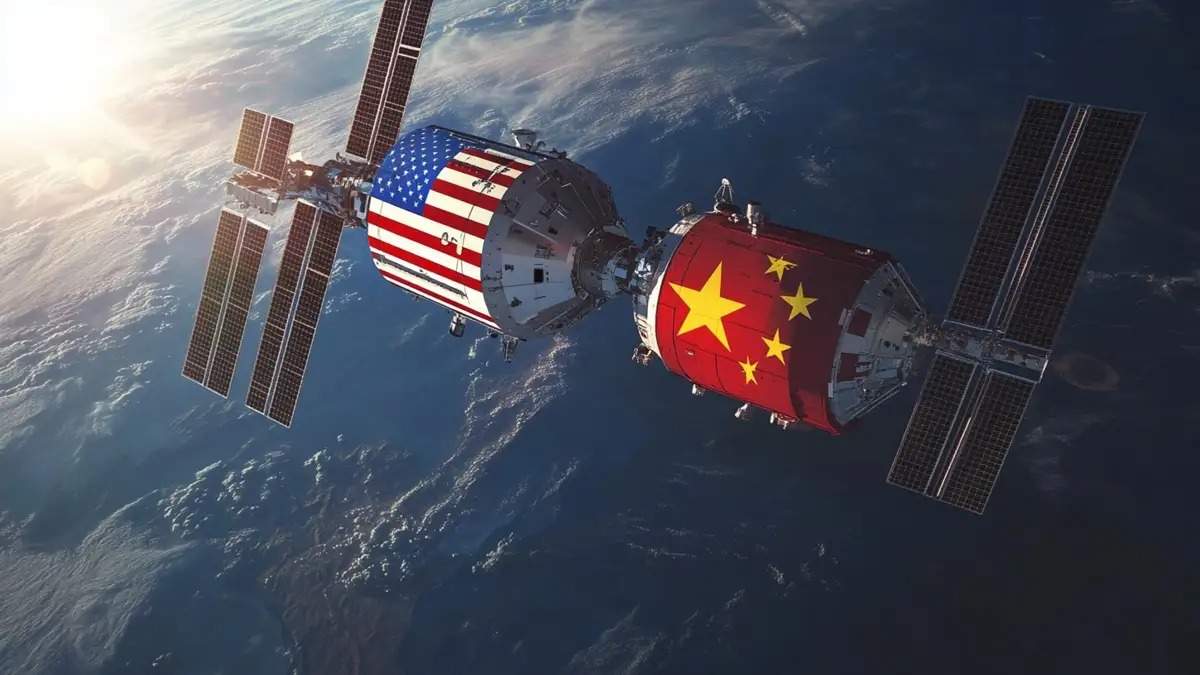
Kathmandu. China, which is rapidly expanding its military and strategic capabilities in space, is challenging American space dominance, according to a report by the US Defense Intelligence Agency (DIA). China is developing technologies ranging from satellite surveillance to anti-satellite weapons, and this could increase the threat to the space systems of the US and its allies, according to the report.
A 130-page long report released at the end of October 2026 identified China, Russia, Iran and North Korea as major challenges to US space security. Mentioning that these countries are developing technology that can block, damage or destroy satellite systems, the report particularly drew attention to China and Russia’s capabilities of jamming, cyber attacks and direct destructive weapons.
DIA estimates that China aims to become a leading power in the space sector, increase its influence on international standards, and use its dependence on the space systems of other countries as a strategic advantage. China had 22 space launches in 2016 and 93 in 2025. Similarly, the report mentions that China launched 40 satellites in 2016 and 384 last year.
According to the report, China will have more than 510 intelligence, surveillance and surveillance (ISR) satellites by mid-2026. The information obtained from these satellites can help in military activities, weapon targeting, weather, sea conditions and communication. According to the report, the Chinese People’s Liberation Army can also use the data obtained from satellites for civilian and commercial purposes.
According to the report, the Chinese satellite system can help monitor the activities of US and allied forces in the Indo-Pacific region and identify the location of aircraft carriers. China is expanding its network by placing a large number of satellites in orbit relatively close to the Earth’s surface. It is mentioned in the report that pictures of any place in the world can be obtained within 30 minutes.
China’s Beidou navigation system has 49 satellites and has more than two billion users, according to the report. The Chinese army is also using it to determine the target of guided weapons. China is expanding space cooperation through satellite construction, launch, training and Beidou services in Africa, Asia and Latin American countries.
According to the report, more than 400 commercial space companies in China can serve domestic and foreign customers. According to DIA, China is developing land-based anti-satellite missiles capable of destroying satellites, along with jamming, cyber attacks and powerful laser technology.
In 2007, China destroyed a weather satellite by firing a missile, and in 2013, it launched an object up to 30,000 km. With this capability, it is estimated that even satellites in space far away from the earth can be targeted.
Similarly, the report states that China is expanding its ability to monitor and interfere with the activities of other countries’ spacecraft from its satellites. Mentioning the 27 satellites of the “Tongxin Jishu Xian” series as possible interfering systems, some of them have come close to 10 km of the foreign spacecraft.
DIA estimates that China can use its anti-space capabilities to prevent US intervention in the event of a regional conflict over Taiwan. It is mentioned in the report that China, which is moving ahead with its commitment not to deploy weapons in space, is continuing to develop anti-space weapons.
After President Xi Jinping disbanded the People’s Liberation Army’s Strategic Support Force in April 2024, space-related capabilities were incorporated into the new Aerospace Force, which remains under the Central Military Commission.
The report also notes that Russia has targeted commercial satellites and communications systems in the Ukraine war, and that China is increasing its space-related assistance to Russian military operations. DIA warns that if China and Russia develop reusable space systems and advanced artificial intelligence (AI) technology in the next decade, the challenge of space security may increase.