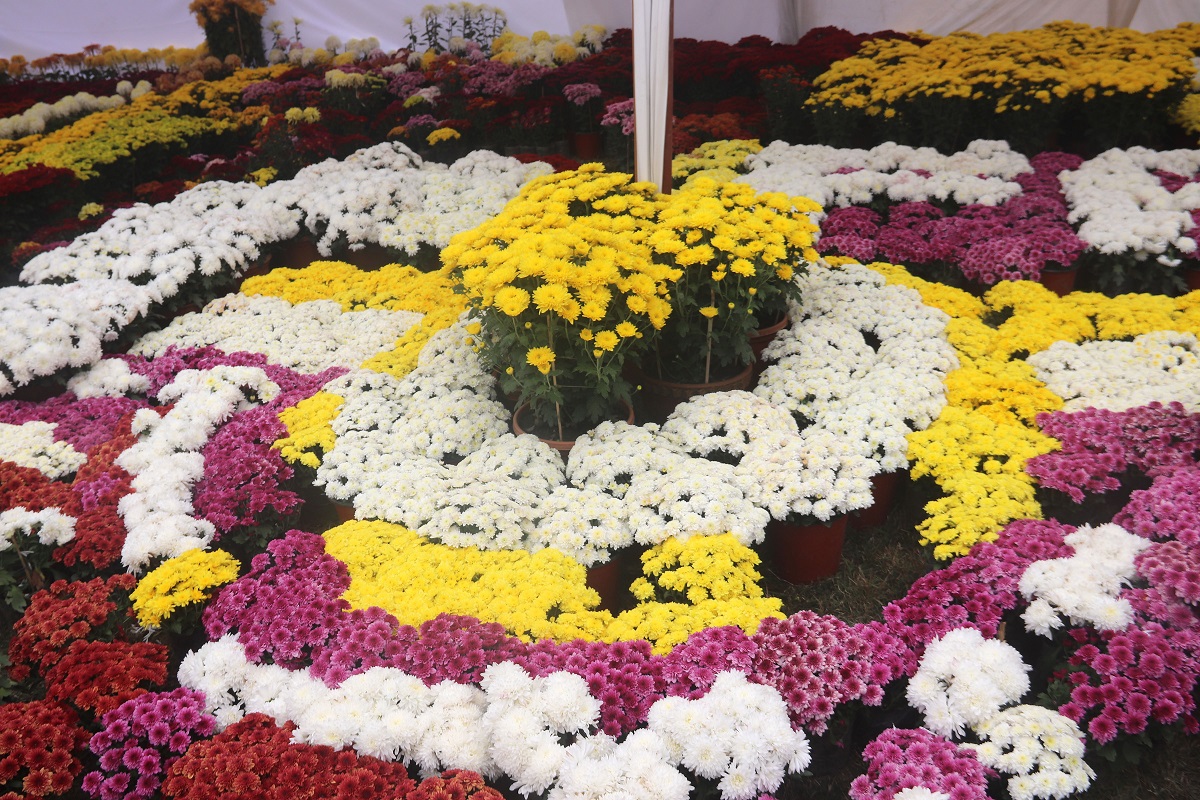
Kathmandu. Colorful flowers, attractive decorations and the bustle of flower lovers, somewhere new varieties of Godavari flowers are attracting the attention of visitors, and elsewhere seasonal flowers and ornamental plants are being bought to decorate homes and gardens. With Tihar approaching, Lalitpur’s Jawalakhel playground has become full of flowers.
Aiming at Tihar and Chhath festivals, the 19th Godavari flower competition exhibition has been organized here. The attraction of the general public to see, buy and get information about new varieties of flowers is increasing in the exhibition started under the initiative of Floriculture Association of Nepal. It has become an opportunity for nursery operators and flower traders to introduce their products and expand their business.
There are a total of 86 stalls in the exhibition. Out of which there are 78 commercial, four official, two competitive, one plant clinic and one photo selfie stall. Along with various varieties of Godavari flowers produced in Nepal, new species introduced this year have also been placed in the exhibition.
One can see and buy more than 450 types of flowers and plants, including Godavari, centipede, velvet, seasonal flowers and figurative plants that can be used to decorate the garden. A competition has also been held between five main varieties of Godavari flowers produced by participating nurseries and firms in the exhibition. According to the organizers, special priority has been given to new types of flowers, floral materials and production techniques.
Businessmen say that as Tihar and Chhath approach, the demand and business of flowers has also increased. According to their budget, consumers can buy flowers and plants from 50 rupees to 2000 rupees at the Jawalakhel exhibition.
The exhibition is not limited to buying and selling flowers. People who want to start a flower business and are interested in decorating their home gardens are also being given information about the production, technology and management of flowers and plants. A plant clinic with a pediatrician has been conducted to provide information about diseases and insects affecting flowers and plants. Here, common people can have their plants health checked and also get necessary technical advice.
According to the Floriculture Association of Nepal, by the time this report was prepared, more than 75 lakh rupees had been traded in the exhibition and more than 23,000 people had already viewed it. The organizers expect more than 39,000 visitors to enter the exhibition and a turnover of more than 13 million rupees. Due to continuous rains, the scheduled five-day exhibition has been extended by two more days.
In Nepal, the demand for flowers is high during festivals, weddings, gatherings and various celebrations. It is estimated that around 5.180 thousand flower garlands including Sayapatri, Makhamali, Godavari and mixed flowers will be consumed in Kathmandu Valley during Tihar this year alone. Although the growing demand shows the potential of Nepali flower business, businessmen are facing challenges such as production cost, availability of quality seeds and plants, land management, modern technology and market management. Competition with imported flowers and plastic artificial flowers is another challenge for businessmen.