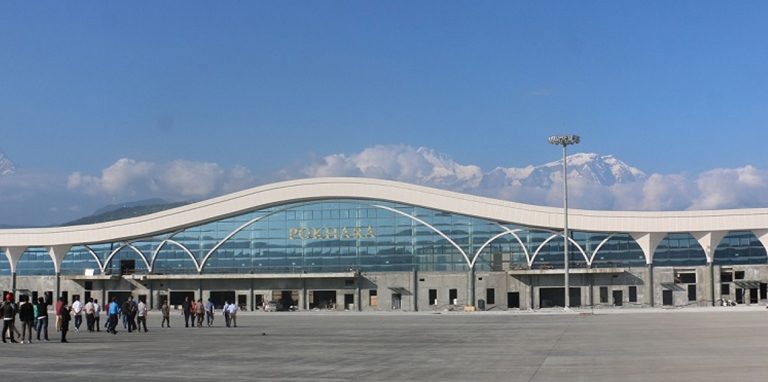
far west Shahid Dashrath Chand University of Health Sciences, which was established at Geta in Kailali after a long wait, is now operational. The university administration is using the physical structures built with an investment of more than Rs.
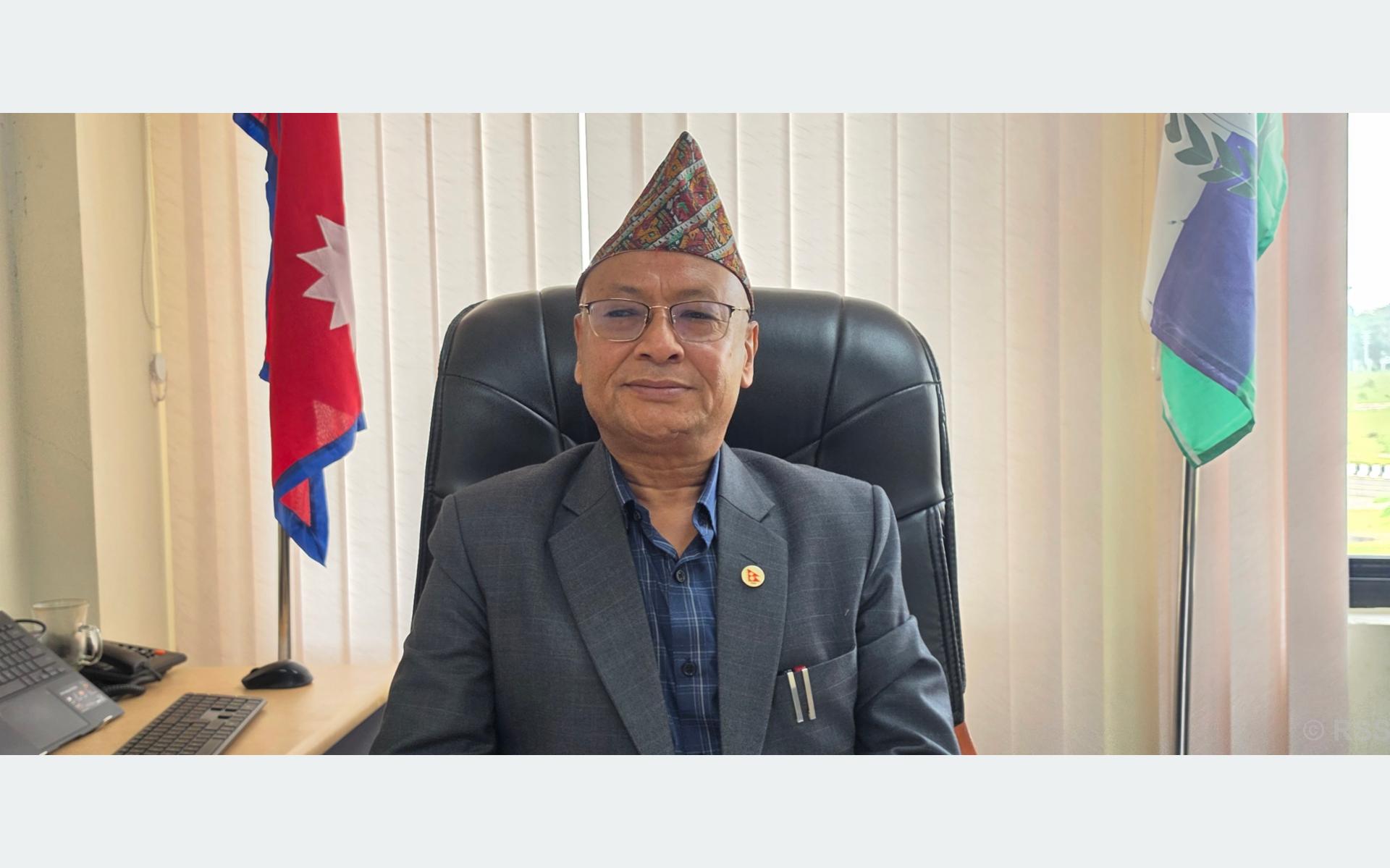
The leadership claims that there has been significant progress in conducting educational programs, expanding the capacity of teaching hospitals and managing skilled manpower. However, there are questions and debates from various angles regarding the operation of the university, the quality of medical education and its future. It is presented, the vice-chancellor of the university Prof. Dr. Edited excerpt from the interview with Sunil Kumar Joshi by Tikaram Sunar and Rama Chand of RSS:
The university is in the final stage of operation. You have an important responsibility to fulfill it. According to that, what are you doing? I have been working in various roles in the health sector of Nepal for a long time. I am trying to use the experience of working in the fields of medical education, research and international cooperation in the improvement of the university. During his stay at Kathmandu University, he has gained experience in building partnerships with world-renowned universities, managing financial resources, and expanding study and research opportunities at postgraduate and academic levels. I have come here in the background of not receiving applications even when the then government called for applications for the Vice-Chancellor twice/twice. I decided to come here only after much thought and consultation.
When I came here, my main responsibility was to start MBBS studies, but I found the situation here different from what I expected. The international level infrastructure built on about 100 bighas of land was unused for years. There is no other health institution with such a large structure in Nepal, but the question of why it could not operate made me very restless. I didn’t even sleep the first night.
My nature is to leave after taking responsibility. So I spoke to the stakeholders. I met with the leadership of the then provincial government and informed them about the situation. They said go ahead, we are with you. For the first three months, we worked day and night on everyone’s trust. Meanwhile, after the change of the federal government, we also withdrew from the ordinance, but the new government also brought me in charge. We are working with a strong determination to fulfill that belief.
You have given responsibility, but how much help are you getting to work? The work done so far in the university would not have been possible without the support of the Prime Minister and his secretariat. In the meantime, we had a discussion in Kathmandu with the MPs representing the Far West in the Federal Parliament. A huge structure has been built from the taxes of the Nepalese people. We insisted that the institution with such a large investment should be operated at any cost. During the preparation of the budget, we took the initiative by staying late at night in the Ministry of Finance. Within three months, we prepared nine regulations and an Organization and Management (O&M) survey. We took pre-approval of the budget from the government for the operation of the 300-bed hospital. According to this, resources of Rs.2 billion and 53 crores and 75 percent of scholarships have been ensured. The provincial and local governments are also providing their best support. Now everyone’s common desire is that this organization should be operational.
Despite the vast infrastructure and legal status of the university, questions are being raised about its justification and operational capability. How have you taken it? There are two important aspects of the university. First, study-teaching and second, teaching hospital operation. Much of the debate now centers on whether teaching hospitals come first or educational programs. As they say, “The chicken comes first, the egg comes first”! It is good to have a debate, but if we continue to argue about this issue, the organization will not be able to move forward. The cabinet meeting on 14th Chaitra 2078 decided to start a 300-bed hospital immediately by sending 11 level directors, but it could not be implemented. Four decades ago, when the University Teaching Hospital was started, there was no infrastructure and manpower like it is now. I know, when the MBBS course started there, the teachers who were sent to ABBS were only those who passed the same level. The institution started from that point gradually developed and became the center of health education and health services in Nepal.
We are just starting our journey. Therefore, work should not be stopped by expecting a fully developed university from the beginning. Let’s not look at teaching-teaching and teaching hospitals separately, because teaching hospitals are mandatory if educational programs are to be conducted. If 50 students are to be enrolled in MBBS, accordingly, a 300-bed hospital and necessary service facilities must be provided. Both of these can be carried forward together. Now we are working accordingly.
Establishing an organization and being able to provide quality healthcare are different issues. What is being done to make Geta a reliable organization? We are working with confidence that we can make it a quality and reliable organization. The hospital was operating here for five years. There were also doctors and about 100 human resources, but the service could not be expanded as expected. During the conflict, I have the experience of conducting maternity services with a small workforce of 25-30 people in Ramechhap and Dolakha with limited resources, even in risky situations. There is a situation where even normal maternity services cannot be provided. We have already started work to correct such weaknesses. Some specialized treatment and surgical services which are not available in Dhangadhi have been started here. Now we extend more specialized services based on local needs. We have a budget, a plan and a clear vision. We will continue the important work by sitting in the university assembly.
However, it is necessary to understand why Geeta is being made a subject of controversy. Why is there a situation of obstruction when the important work starts? Yesterday, there were some challenges when proceeding with the process of filling the posts of specialist doctors according to the standards of the Medical Education Commission. There were 306 applications for 77 departmental specialist doctors. Experienced and distinguished doctors also showed their desire, but at that time protest and hunger strike started regarding the issue of university. It caused confusion among many and some senior doctors of the application were not ready to come. The doctors who have been selected now are also skilled and capable. Some parties are wondering whether such confusion can be created when the students are selected again. There is no need to deviate from it. It is a priority organization of the government, in any case we will continue the work of teaching and health services.
What are the preparations for conducting the four educational programs allowed by the Medical Education Commission? The subject that students study for the first two years is related to this. For that, the necessary structures, laboratories, materials and equipment and infrastructure specified by the Medical Education Commission are ready. We have also completed the necessary preparation for B.Sc Nursing, Medical Lab Technology and Optometry programs. Another base for starting optometry is Geta Eye Hospital. We are starting this program with the idea that the hospital, which is providing excellent services in this area, can also be developed as an educational center.
Some people say that the educational program was rushed without adequate preparation and the teaching work was started by showing the beds of other hospitals. It is not that the university was rushed, but it was too late. The structure has been built on about 100 bighas of land. The government has already invested billions. If we don’t operate now, these structures will become dilapidated. Is such a large investment made to support the structure?
As far as the topic of using beds from other hospitals is concerned, before saying that, one should understand about the university’s own teaching hospital. The Nepal government has legally built a 300-bed hospital here. Necessary structures and human resources have been mobilized. We are adding manpower not only according to the standards set by the commission, but also to provide more specialized services. It is only after two years that our students have to go into clinical practice. By that time, we plan to expand the hospital to 5 to 600 beds. There is a budget, plan and necessary preparation for that.
Another important thing is that it is a university. Its scope is not limited to the premises of Geta. You have to look at the country as a whole. The first responsibility is to improve the health conditions of the citizens of Far West. For that, we have to work across the Far West. The University Act provides for expanding services by using federal, provincial and local level hospitals as teaching hospitals. Accordingly, an agreement has been signed with four hospitals. This does not mean that we should not develop our own teaching hospital. The main purpose of our cooperation with these hospitals is to develop their capacity and expand access to quality health services to citizens. Recently, in a case where there was a complication during surgery at the Mahakali Regional Hospital, a senior doctor here worked day and night to save his life. This is an example of cooperation.
Dr. Govind KC is on hunger strike demanding the cancellation of the seat given to Geta by the Medical Education Commission. How have you taken his demands and concerns? I respect Dr. KC a lot. He has made an incomparable contribution to the improvement of medical education in Nepal. The establishment of such an organization in Geta is also a result of his campaign. We have taken the question raised by Dr KC seriously. The essence of his campaign is that the students of the Far West should be able to study quality medical education in their own area and the citizens of this region should not have to go abroad for quality health services. We are also working to fulfill the same purpose. It is being completed. He should also be happy about it. We are aware of the questions raised by him. For that reason, I believe that the Director of the Medical Education Commission must have come here along with senior doctors and made a detailed assessment of the infrastructure and preparations. Only after that the seat is determined. We do not compromise on quality education. We will not allow him to be disappointed by our activities.
Are there any conditions or criteria that need to be fulfilled before starting the teaching work? This is a proud institution in which the Government of Nepal has invested heavily over the years. The necessary infrastructure is ready. We are working hard to manage the minimum standards set by the Medical Education Commission even before students enroll and start their studies.
The purpose of establishing the university is sacred, but there is still confusion and doubt about its future. How do you ensure its long-term future in terms of leadership? When establishing any organization, you have to think about its sustainability from the beginning. The leadership should work with a view not only of today’s needs, but also of what the organization will be and build in years to come. This institution is the first health science university of Nepal. It has its own historical significance and identity. Our goal is to make it an international organization by making it trustworthy within the country. For that, we will expand cooperation and partnership with prestigious universities of the world. I have worked as a visiting professor in various international universities. I have also been teaching undergraduate students at the world famous Oxford University. I will use all those experiences here.
We will take everyone together and create such an institution, which can truly be called a university. We do not want to develop it only as a teaching hospital with departments in the traditional sense. We are thinking of establishing specialized service centers like Cardiopulmonary Center, Sexuality and Reproductive Health Center, Child Health Center and Surgery Center. The goal is to make it a research-based community health service center. This university has the potential to serve not only 2.7 million citizens of Far West, but also more than 30 million people including citizens of other regions of the country and across the border. Our goal is to ensure its future by developing a system that can be operated from its own resources. We will lay the foundation for it.
Finally, what would you like to say to the citizens of Far West and the stakeholders of the university? First of all, I would like to express my respect to the citizens of Far West. Citizens have great love and expectations for this university. When I took over, there were only weeds everywhere. When I made a call, more than 15,000 citizens spontaneously participated in the cleanup. The local level has also supported the same.
It proves that this institution is connected with the dreams and aspirations of the citizens here. In the future, let’s start a campaign to run the organization well by producing skilled manpower from this university. My leadership is committed to make this institution worthy of pride not only of Far West, but also of the country. This institution belongs to the government of Nepal, so there will be no problem in its future, sustainability, quality and reliable teaching and learning. We leave it as a destination for medical education and a center for specialized services. With everyone’s joint efforts, we are hopeful that the history of the university will be created.