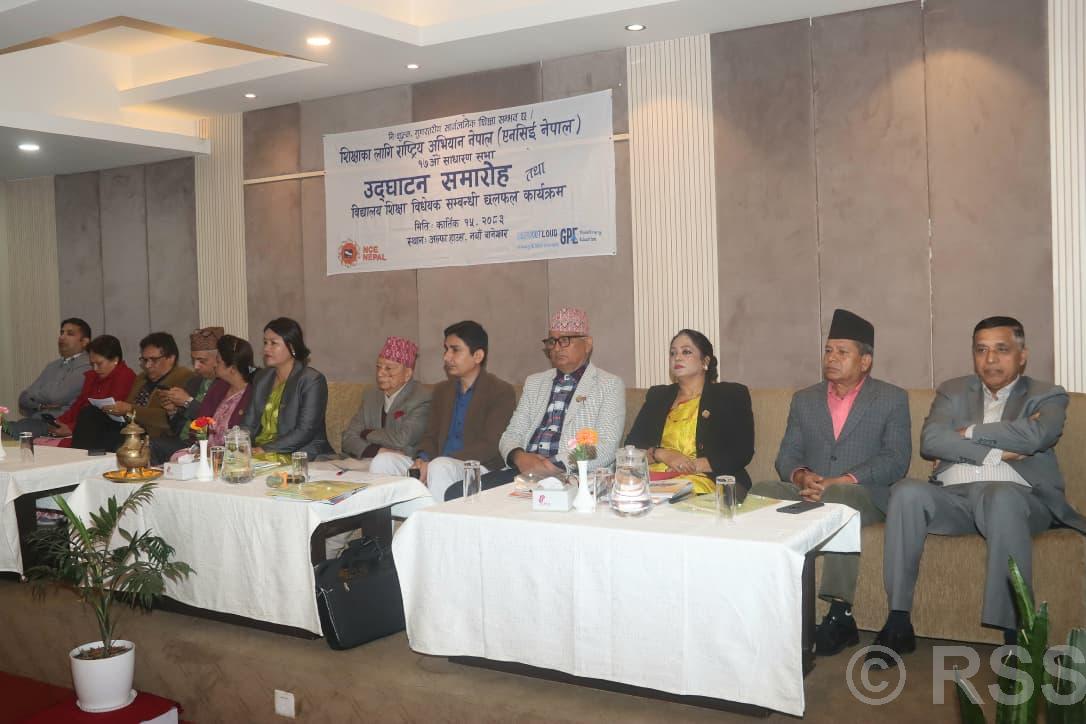
Kathmandu. Parliamentarians, policy makers, experts and rights workers have a common emphasis on bringing a school education bill to ensure the right to free and quality education guaranteed by the constitution.
In the debate on the proposed school education bill held here today on the occasion of the 17th annual general meeting of the National Campaign for Education (NCE) of Nepal, the speakers said that public education should be the responsibility of the state, clear authority should be shared between the central, provincial and local levels in educational management and adequate budget allocation should be made for education.
Inaugurating the program, National Human Rights Commission Chairman Tap Bahadur Magar said that policy makers should accept the suggestions made regarding the improvement in education as compared to the past. He emphasized that education should be child-friendly, inclusive, school safe and have minimum infrastructure.
Kusum Maharjan, a member of the House of Representatives elected from the National Independent Party, urged them to work with the feeling that the improvement of education is everyone’s responsibility, and expressed their commitment to do their best for the work to be done by the government and parliament. He asked to have a close dialogue about the issues that should be included in the bill and suggest measures to be taken to make everyone feel justice.
Dr. Pramilakumari Gachchdar, a member of the House of Representatives elected from the Nepali Congress, said that at least 20 percent of the total budget should be allocated to education and the issues raised by the stakeholders should be addressed. Guru Prasad Baral, a member of the House of Representatives elected from the CPN (UML), said that if the government brings the school education bill in the right way, they will try to make it more implementation-oriented.
Sajida Khatun Siddiqui, a member of the House of Representatives elected from the UML, insisted that no outside party should dominate the drafting of the bill and demanded a clear explanation of child labour. Hariprabha Khadgi, a member of the Bagmati State Assembly, said that the confusion in the distribution of powers between the three levels should be removed and the bureaucracy should not dominate policy making.
Shivkumar Sapkota, joint secretary of the Ministry of Education and Sports, informed that the bill will be introduced by including the content of the Constitution of Nepal and the suggestions received from the concerned parties. Balanand Poudel, the former secretary of the same ministry, suggested that the policy aspect of education should be made more clear since the central government and the operation/management of school education is at the local level.
Educationist Prof. Dr. Vidyanath Koirala said that every local level should implement the provisions of the Constitution of compulsory and free education through the proposed bill. Educationist Prof. Dr. Balchandra Luintel analyzed the demographic situation and reinterpreted the resources in education.
Sunder Pant, the president of the Nepal Teachers’ Federation, asked to rise above the thinking that teachers are weak in school reform and demanded that trade union rights should be respected in the bill. Giridhari Subedi, the spokesperson of the National Handicapped Federation, said that the right of students with disabilities to read easily should be implemented.
Loveraj Oli, president of NCE Nepal, informed that their campaign, which has a network in 46 districts and has 550 members, will make recommendations to the government about the bill after including suggestions from all parties. In the program, Rupandehi District Committee was honored as the best district network of NCE Nepal.